Eco-Friendly Home HVAC Upgrades That Reduce Your Carbon Footprint
Vancouver homeowners who choose eco-friendly HVAC upgrades gain three benefits because their energy consumption decreases, their utility expenses decrease, and their household carbon emissions decrease while they maintain their home comfort. Your home gains improved climate change protection through smart energy-efficient heating and cooling systems because the region faces increasing heat waves and extended periods of mild damp weather. (source)
Why greener HVAC matters in Vancouver
The average Canadian home uses space heating as its primary energy source because it consumes more than 60% of total energy and emits a significant portion of building sector greenhouse gases. Clean home heating and cooling solutions are vital for Canada because buildings produce approximately 18 to 23 percent of national greenhouse gas emissions. (source)
Most Vancouver houses and low-rise buildings still rely on natural gas furnaces or boilers which produce carbon emissions during their operation especially when used on cold damp winter days. The implementation of modern high-efficiency and electric-leaning systems will provide two advantages because they reduce environmental damage and enhance indoor climate and air quality.
1. Switch to high‑efficiency or hybrid heating
Modern condensing furnaces and boilers extract more heat from the same amount of fuel, cutting both gas use and emissions compared to older equipment. A hybrid system that uses a high-efficiency gas furnace together with an electric heat pump system will decrease greenhouse gas emissions by 30 percent during the heating season for homes that cannot fully transition to electric power. (source)
The system operates a heat pump during times of mild weather and off-peak periods, while it uses gas during times when that method provides maximum efficiency to maintain comfort and budget and environmental impact. The system works well in Metro Vancouver because the region’s coastal climate provides optimal conditions for heat pump operation on most winter days.
2. Install a cold‑climate heat pump
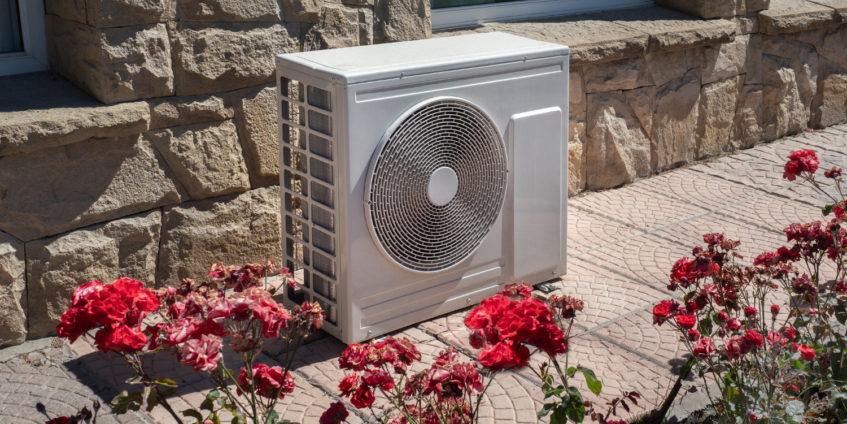
Air-source heat pumps operate by transporting heat instead of producing heat which enables them to provide three times more heating power than their electrical consumption. The Canadian home heating sector can achieve its greatest emissions reduction through heat pumps which operate on electricity while delivering higher efficiency compared to electric baseboards and resistance heaters. (source)
Analysts estimate that almost 80% of emissions from residential buildings come from space and water heating technologies which require heat pumps to double their current home heating market share by 2030 in order to maintain a net-zero emissions path. British Columbia already demonstrates progress toward this goal because the province has installed over 24000 heat pumps through federal programs by late 2024 while it expands its support for electric heating systems.
3. Take advantage of BC heat pump rebates
The main obstacle to renewable HVAC systems is their initial expense yet the rebate system in British Columbia enables homeowners to make upgrades while reducing their expenses. The combined incentives from BC Hydro and CleanBC which start in 2025 provide eligible households with multiple thousand dollar benefits for their entire residence or partial heat pump systems which apply to low income homes and buildings that transition to renewable energy sources. (source)
The programs deliver financial assistance which reaches 4,000 CAD to fund heating systems that supply 80% of residential heating requirements and they offer extra financial support to low income families which can total between 5,000 and 12,000 CAD based on their particular project. BC Hydro provides heat pump rebates which reach 4,000 CAD when homeowners replace their electric baseboards and old systems with high efficiency heat pumps that professional contractors install.
4. Optimize controls with smart thermostats
The implementation of smart thermostats together with zoned control systems allows energy efficiency improvements which decrease both energy consumption and greenhouse gas emissions through improved heating and cooling systems. Smart controls adjust temperatures based on schedules, occupancy, and weather, which can be particularly effective in Vancouver’s shoulder seasons when homes often cycle between “too warm” and “too cool.” (source)
Smart control exists as a fundamental component in numerous hybrid heating systems which automatically determine the most environmentally friendly and cost-effective heating method by evaluating current outdoor conditions and electricity pricing. The precise system operation generates sustainable savings through decreased emissions and reduced utility costs over an extended period.
5. Don’t forget building envelope and maintenance
The combination of eco-friendly HVAC systems with properly sealed and properly insulated homes creates a system that prevents outdoor temperature control losses. National research identifies insulation together with window and air-sealing improvements as the most effective retrofitting solutions which reduce household emissions while enhancing indoor comfort. (source)
The process of regular maintenance ensures that furnaces and boilers and heat pumps operate at their highest efficiency levels while maintenance work stops problems which include clogged filters and low refrigerant charge and combustion issues that lead to increased energy consumption and greenhouse gas emissions. British Columbia programs provide small financial incentives to cover professional HVAC system maintenance because they acknowledge the value of maintenance work for sustaining system performance throughout time.
6. How AceTech supports greener homes
The selection of an appropriate eco-friendly HVAC solution requires evaluation of your existing system together with your home’s physical structure and your targets for achieving comfort and managing expenses and reducing carbon footprint. A trained local contractor can inspect your heating system components which include your furnace or boiler and ductwork and electrical capacity and building envelope and provide guidance on whether to implement a high-efficiency unit or hybrid solution or complete heat pump system. (source)
AceTech Plumbing and Heating Ltd. operates from its Vancouver headquarters to deliver sustainable HVAC system design and installation services throughout the Metro Vancouver area while maintaining operational efficiency and environmental responsibility. Their services enable customers to develop an effective plan which combines high-efficiency gas systems with heat pumps and smart control technologies and ongoing maintenance solutions to enhance their home’s sustainability performance.
For eco‑friendly home HVAC upgrades that reduce your carbon footprint in Vancouver and the Lower Mainland, you can contact AceTech:
- Phone: 1 (844) 704‑4177
- Email: contact@acetechltd.ca
- Location: Vancouver, BC