Central Air vs Ductless Air Conditioning: Which Is Better for Canadian Homes?
As Canadian summers grow warmer and more humid, homeowners are increasingly investing in efficient air conditioning systems. Two of the most popular options are central air conditioning and ductless mini-split systems. Both technologies can cool your home effectively. However, the best choice depends on factors such as your home’s size, existing ductwork, energy efficiency goals, and budget. HVAC professionals like Acetech Ltd often assist homeowners in evaluating these factors to find the best system for long-term comfort and efficiency. This guide explains the key differences between central AC and ductless AC and which one works best for Canadian homes.
What Is Central Air Conditioning?
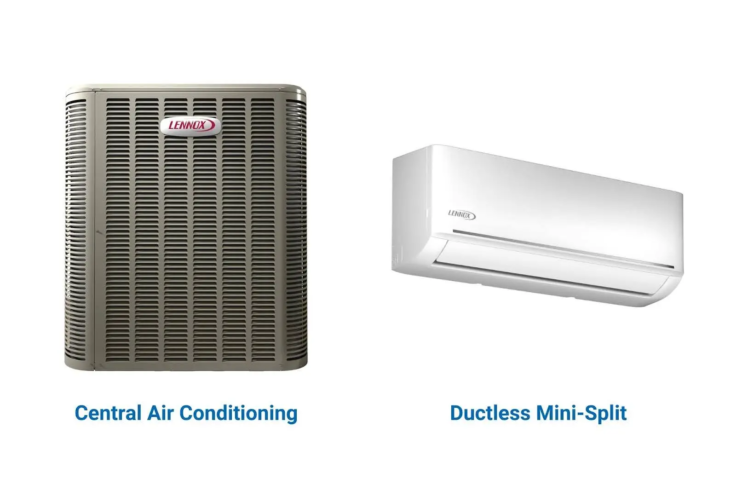
Central air conditioning systems cool your entire home using a single outdoor unit connected to an indoor coil and ductwork system. The cooled air is distributed through ducts and vents into every room.
Key Features
– Whole-home cooling through ducts
– Uses a furnace or air handler to circulate air
– Controlled by a central thermostat
– Air is distributed evenly throughout the house
Advantages
- Whole-Home Cooling: Central AC cools the entire house evenly, making it great for larger homes.
- Clean and Hidden Design. Only small vents are visible inside the home, which looks nicer compared to wall-mounted indoor units.
- Works with Existing Heating Systems Many Canadian homes already have forced-air furnaces with ductwork, allowing central AC to integrate easily.
Limitations
– Requires ductwork installation in homes that don’t have it.
– Energy loss can happen through ducts due to leaks or insulation problems.
– Less flexibility for cooling individual rooms.
What Is Ductless Air Conditioning?
Ductless air conditioning (mini-split systems) has an outdoor compressor connected to one or more indoor units mounted on walls or ceilings. These systems cool specific zones or rooms without needing ductwork.
Key Features
– No duct installation required
– Indoor units mounted in each room or zone
– Individual temperature control for each room
– Highly energy-efficient operation
Advantages
- High Energy Efficiency: Ductless systems avoid energy loss through ductwork and can work more efficiently than traditional systems.
- Zoned Cooling: Each room can be cooled separately, reducing unnecessary energy use and improving comfort.
- Easy Installation: Only a small wall opening is needed to connect the indoor and outdoor units, making installation quicker and less disruptive.
Limitations
– Indoor units are visible on walls.
– Multiple units may be necessary for large homes.
– Upfront costs can rise if many rooms need cooling.
Which System Is Better for Canadian Homes?
The best option depends on your home’s structure and cooling needs. Choose Central Air Conditioning If:
– Your home already has existing ductwork.
– You want consistent cooling throughout the house.
– Your home is large (2,000+ sq. ft.).
– You prefer a hidden system without visible units.
Central systems are common in newer Canadian homes that already have forced-air heating systems. Choose Ductless Air Conditioning If:
– Your home does not have ducts.
– You want individual temperature control for different rooms.
– You are cooling specific areas like basements, offices, or additions.
– Energy efficiency and lower monthly bills are important to you.
Ductless systems are especially popular in older Canadian homes or renovation projects where installing ducts would be expensive or invasive. Energy Efficiency and Cost Considerations Energy efficiency is a major factor for Canadian homeowners. Ductless systems can lower cooling costs because they avoid duct energy losses, which can reach up to 30% in some homes. Central systems may be more cost-effective when ductwork already exists. Installation costs in Canada can vary widely based on the home and system size. However, ductless installations often save money when ductwork installation would otherwise be necessary.
Expert Recommendation from Acetech Ltd Choosing the right air conditioning system requires a professional assessment of:
– Home size and layout
– Insulation levels
– Existing duct infrastructure
– Cooling demand during Canadian summers
The HVAC experts at Acetech Ltd help homeowners assess these factors and recommend the most efficient and affordable cooling solution for long-term comfort.
Final Verdict
Central AC vs Ductless
There is no one-size-fits-all solution.
Central Air → Best for large homes with existing ductwork.
Ductless AC → Best for energy efficiency, zoning, and homes without ducts.
The ideal system depends on your home’s structure and cooling needs. Consulting HVAC professionals like Acetech Ltd ensures you choose a solution that maximizes comfort, efficiency, and value.